I got married at 23 to my college sweetheart. I’d never downloaded a dating app. I didn’t understand the pains of online dating.
Somehow I found myself designing a dating app.
Like every good designer, I tried to empathize with my users. I have single friends. I’ve been on my fair share of awkward dates. But for me, finding romantic relationships has never been that painful.
I tried to dig into the pain my users were feeling, but in the back of my head I kept thinking, “Come on guys, just be nice and get to know people…it’s not that hard!”
The Test
After a few weeks at Icebrkr, we started user testing. I thought it would be uncomfortable, but I knew that this was what UX Designers were supposed to do, so I dove in.
I read Sprint by Jake Knapp; I created user testing goals and a script. I sent out emails and surveys and follow up emails. I tried to find people who had characteristics of our target user. This included people who are looking for a long-term relationship people who are frustrated with online dating. Finally, I narrowed down our group of testers to five people and we scheduled the video calls.
I thought I was “nervous-excited”, but it turns out I was just nervous. I totally messed up the recording and the whole call was a mess. We regrouped for the second interview and tried again.

The second interview changed everything for me. The woman we talked to was very outgoing and open. I could hear the frustration in her voice, and see it through her body language.
Her frustration didn’t surprise me. I expected our target users to be fed up with dating. Her personality is what surprised me.
I’m ashamed to admit that I expected most of our target users to be a little…socially awkward. I was shocked that this beautiful, smart, bubbly woman was having a hard time dating. Why? How could someone so personable have such a hard time finding a romantic connection? She’s not awkward or anti-social; she’s not afraid of commitment. Why would things not work out for her?
Catching the Empathy Bug

Throughout this user testing experience, I was open to being proved wrong. I wanted to believe that online dating was hard and painful and had problems that needed to be solved. I was open to learning why online dating wasn’t easy and simple. This open attitude allowed me to begin to empathize…
I started thinking that maybe I got lucky. Maybe I would be in the same boat if I hadn’t met my husband during our first year of college. I started to imagine what it would feel like to online date. I thought about what it might be like to get my hopes up and then have my match ghost me. Or how it would feel to realize that that my match is just a fake profile or that he’s only interested in a hookup. ugh. It all started to feel bleak and gross and unsettling.
Maybe online dating is harder than I thought.
How are these amazing people supposed to find each other? How are the serious dating supposed to crawl through the weeds and find the other serious daters? The apps they’re using are full of casual daters and people interested in hookups; where can the serious daters go?
When you create an app that allows people to make an account and start swiping in under 60 seconds, you create a specific environment. This environment allows fake profiles, casual daters, and catfishers to thrive. This is not what our users are looking for.
This is not what I would be looking for if I was online dating.
Empathy Takes Time and an Open Mind
There’s a lot of pressure on designers to immediately get on board with the products they design, but empathy takes time. When I was first introduced to Icebrkr, I can admit that I didn’t believe in my product, and that’s okay.
If you’re like me and you don’t quite understand your users’ emotions yet, I’m sure you know what I’m going to say…talk to your users! User testing helped me understand the pain that my users are going through. It completely changed my perspective.
But before you start scheduling user interviews, check your attitude. When you talk to your users, you have to be open to changing your mind. If you go into the interview with your mind already made up, you’re not going to listen well and you won’t walk away with the empathy you need.
Learning to empathize with others is a skill. Practice it. Try to feel their emotions. Think about their circumstances and feelings.
Choose a Product That’s Worth Building
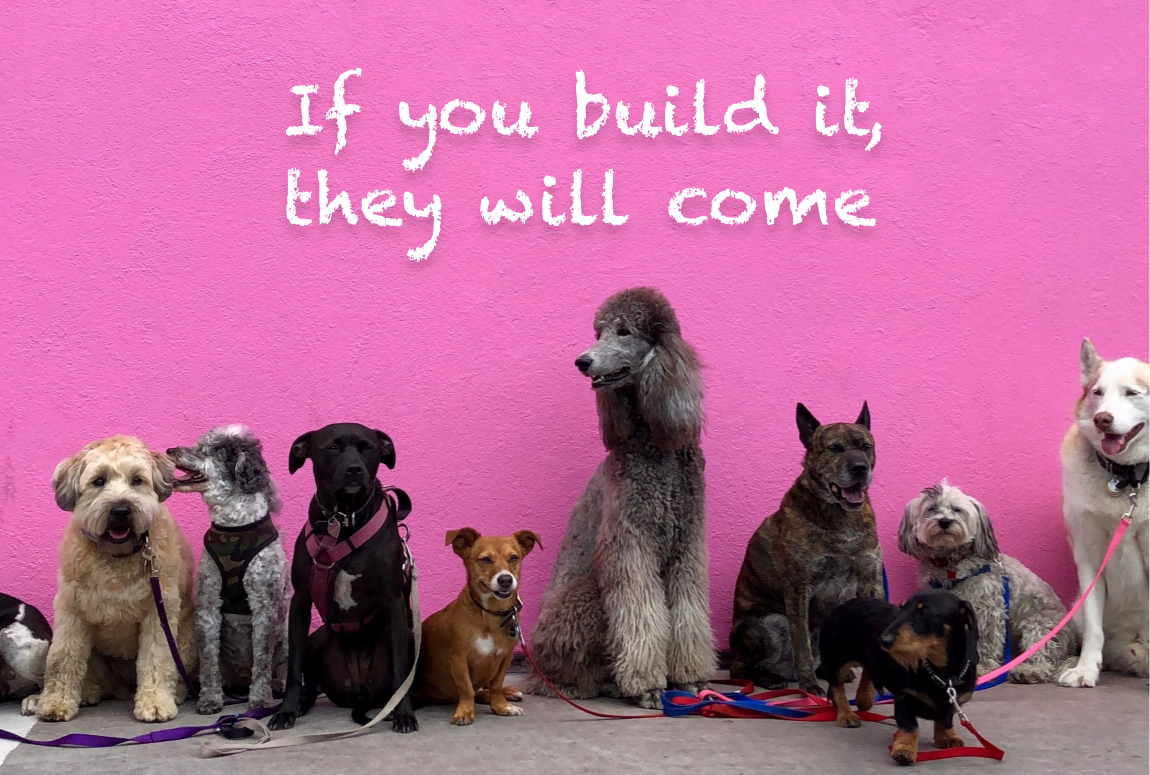
A good test to see if you have developed empathy for your users, is to take a good look at your product. I’m sure you’ve heard the famous line from the movie Field of Dreams, “If you build it they will come.” But I challenge you to ask yourself: is what your building good for them?
Is your product worth building? Will it improve people’s lives?
I recently read the book Hooked: How to Build Habit-Forming Products by Nir Eyal (I know, I know, I’m late to the game). Towards the end of the book Eyal talks about the moral questions around creating a product. He gives us this Manipulation Matrix to test your morality as a designer.
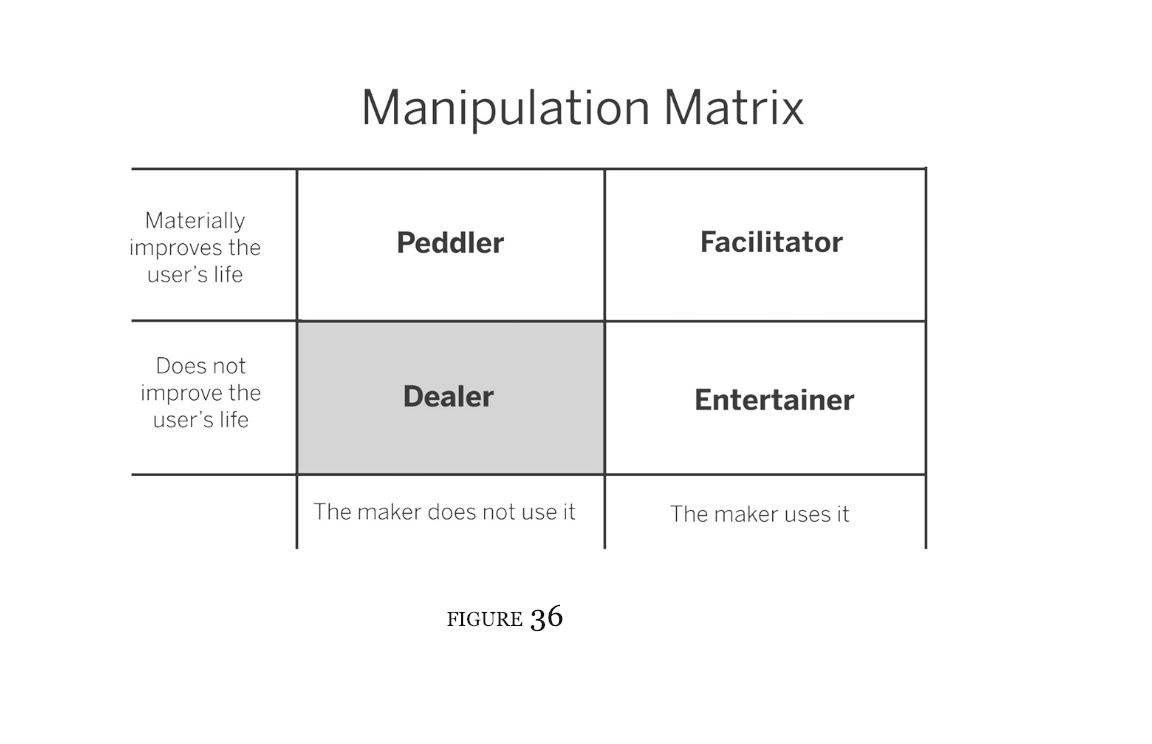
Eyal argues that successful and moral products come from “Facilitators”. Facilitators are designers who create products that have two important qualities:
1. The product is useful enough for the designer to use it herself.
2. The product generally improves the user’s life.
Take a good look at your product and think about where you fall in the manipulation matrix. Would you use your product? Is your product good for your users?
Think about how your product is solving the problem your users are experiencing. If you’re having trouble with this, maybe you’re not building an ethical product. If you are truly invested in your users, you’ll want to build a product that improves their lives. If you can see how your product is easing the pain that your users are feeling, that is a very good sign.
And isn’t that what being a designer is all about? Creating a more beautiful, easy, simple, enjoyable world for the people around us?
Icing on the Cake
I believe that Icebrkr is a product worth building. A few months ago, I might not have said that. I knew that Icebrkr was different. I wouldn’t have joined a company whose mission was to get people to hook up; I’m a LTR kind of girl. But I didn’t think the problem we were solving for was that important. I thought online dating was simple, just be nice.
It turns out, I was wrong. Online dating isn’t easy. As I talked to frustrated people, they changed my perspective.
My new-found empathy created a new-found love for my product. I started to understand why people needed an app for serious daters. I realized how much good could come from our app. These frustrated, yet wonderful people could find happiness through our product.
This empathy fueled our designs. I was so excited to create after those interviews! We redesigned the onboarding of Icebrkr based on the feedback we got from user testing. And this week, we are launching our product in Boston!
I’m so glad that I worked to develop understanding for our users. I believe I am a better designer and Icebreaker is better app because of this experience.